
Home » Employment (Page 2)
Category Archives: Employment
HR 101: What Not to Write in Personnel File After Employee Files EEOC Complaint

The human resources manager for the defendant in the recent Texas Court of Appeals case of A&L Industrial Services, Inc. v. Oatis, apparently never took this course. Largely because of his actions, the plaintiffs—former employees who were terminated—were able to convince a jury not only that they were retaliated against for complaining about discrimination, but also that they were entitled to punitive damages. What is somewhat surprising is that the appellate court upheld these findings in spite of the fact that the plaintiffs failed to prove their underlying discrimination claim.
To find out what happened, click here, and you will be taken to my post on our firm’s website.
As Senate Debates ENDA, New York’s Sexual Orientation Non-Discrimination Act Celebrates its 10th Year
 On the drive home this evening, NPR reported that the U.S. Senate had just voted to move forward with debate on the Employment Non-Discrimination Act, which would expand the protections afforded under Title VII of the Civil Rights Act of 1964 to prohibit discrimination based on sexual orientation or gender identity. Although the bill faces an uncertain future in the House (it was reported that the Speaker came out against consideration of the bill), many states already have laws prohibiting discrimination against LGBT people. But many do not.
New York is one of the states that enacted such protections. The New York Sexual Orientation Non-Discrimination Act (“SONDA”) was signed into law by Governor George Pataki on December 17, 2002, and the law became effective on January 16, 2003. An easy-reader summary of SONDA and its protections may be found in a brochure on the New York State Attorney General’s Website. Additional information may be found on the website for the New York State Division of Human Rights.
Although part of my practice involves representation of both employers and employees in discrimination cases, in the decade since the SONDA was enacted, I can count the number of cases I’ve handled involving an allegation of discrimination based on sexual orientation on one hand. By far, the vast majority of cases I’ve handled over the years have involved allegations of discrimination or harassment based on race, gender or disability. But, that doesn’t mean that statutes like SONDA are not needed, and in time, we may soon see a day when the protections of the ENDA are the law of the land.
Do You Have Reasonable Expectation of Privacy When Using Work E-mail?
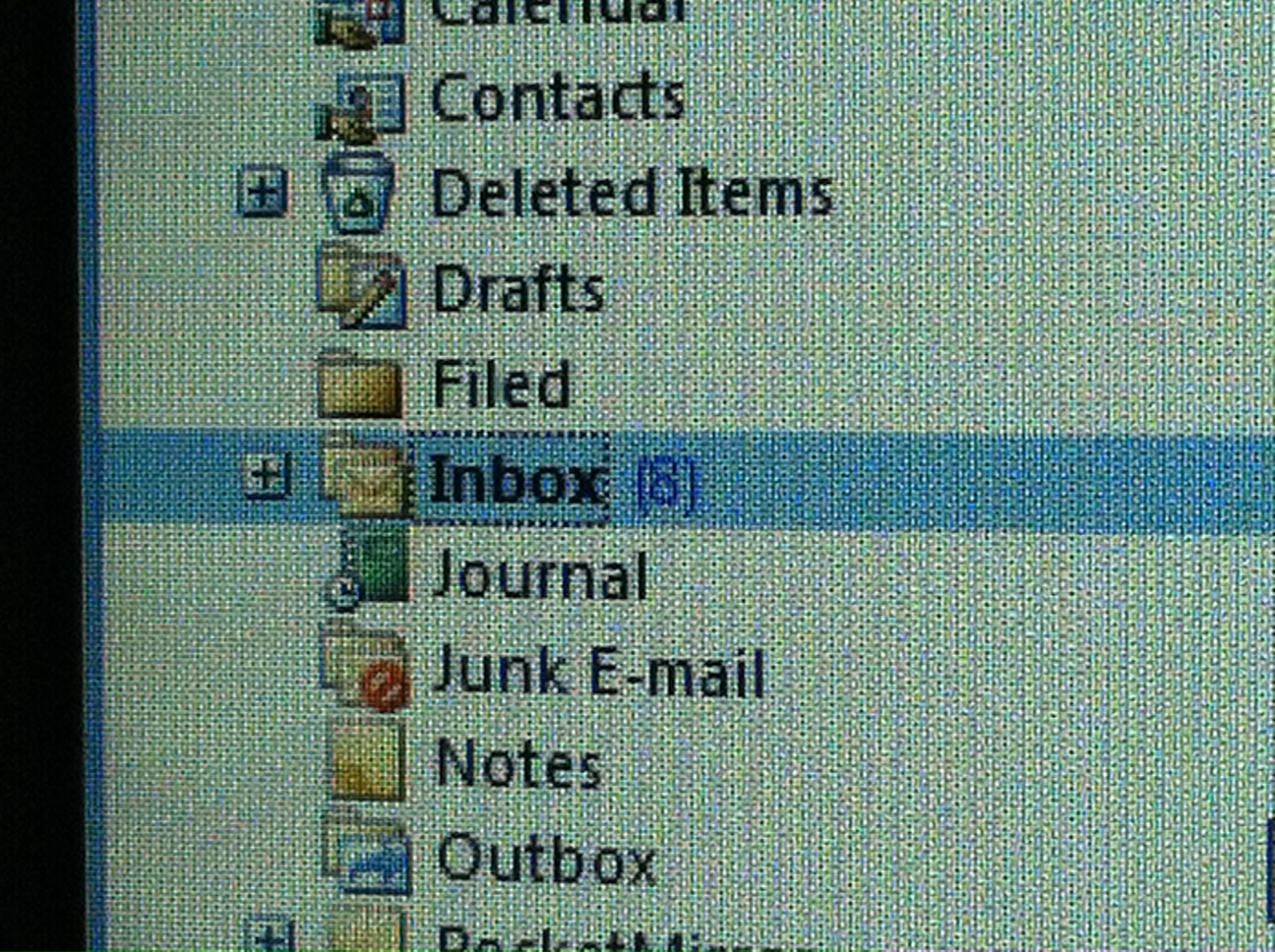
Maybe not. Unfortunately for a former Aeropostale executive, the United States District Court for the Eastern District of New York recently held that he did not have any reasonable expectation of privacy in an e-mail he received from his private attorney at his work address. The case of United States v. Finazzo highlights the risks inherent in using your employer’s e-mail for personal communications–especially when those communications would otherwise be privileged. In this case, the e-mail at issue ultimately lead to the employee’s termination, and subsequent prosecution.
Mr. Finazzo–a former executive at clothing retailer Aeropostale–was charged with a fraudulent scheme in which he allegedly received kickbacks from certain transactions between Aeropostale and South Bay Apparel, Inc., a clothing vendor controlled by another individual (Douglas Dey). Although the indictment alleges that the scheme began in 1996, Aeropostale apparently did not discover it until 2006, while undertaking an unrelated forensic investigation.
During the investigation, an e-mail from Mr. Finazzo’s personal attorney was discovered in his work e-mail account. In the e-mail, Mr. Finazzo’s attorney asked him to review an attached asset list, and confirm the values of various assets for the purposes of creating a will. Among the assets listed were several companies co-owned with Mr. Dey, including South Bay Apparrel, a company that served as a primary vendor of Aeropostale merchandise. Upon learning that Mr. Finazzo had undisclosed ownership interests in companies owned by one of Aeorpostale’s primary vendors, Aeorpostale decided to terminate Mr. Finazzo for cause.
This case came to be decided because Mr. Finazzo was asking the court for an order precluding the government from introducing the e-mail (and anything derived from the email) at trial. Ultimately, the court denied Mr. Finazzo’s motion. The court’s decision turned on whether Mr. Finazzo had a reasonable expectation of privacy in his work e-mail account. Under the facts of this case, the court held that he did not.
In rendering its decision, the court noted that it had before it several versions of Aeropostale’s policies governing its employees’ use of company e-mail dating back as early as 1999. Although each policy had slight variations, and in some cases even permitted incidental personal use, they all stated that the employee “should have no expectation of privacy when using Company Systems.” The policies also reserved a right by the company to monitor, access, delete or disclose employees’ e-mails at any time without further permission. Additionally, in each case, Mr. Finazzo also signed receipts, acknowledging that he had read and understood the policies.
At first blush one aspect of this case seems unfair to Mr. Finazzo. How could the court hold that he waived his privilege with respect to the contents of this communication from his attorney when he was the recipient of the e-mail, not the sender? This is because Mr. Finazzo has not–indeed he could not–allege that his attorney looked up his Aeropostale e-mail address and unilaterally sent him confidential information. “Rather, Finazzo chose to communicate with his lawyer through a medium in which he had no expectation of privacy, thus inviting responses via that same medium.”
Mr. Finazzo also did not simply delete the allegedly confidential e-mail. He admitted that after he received it, he forwarded it to his personal, non-Aeropostale e-mail account before he deleted it. Thus, after he received the e-mail and recognized it as confidential, “he then turned around and sent it back through Aeropostale’s e-mail servers to another account. ” In so doing, he allowed Aeropostale another opportunity to see the e-mail. Thus, according to the court, “even if Finazzo were correct that his ‘mere receipt’ creates some legally cognizable distinction, such would be unsupported by his own record.” Mr. Finazzo both sent and received the privileged e-mail.
This is not the first time a court has held that an otherwise privileged e-mail communication loses its protection because it was sent from a work e-mail account. But, it serves as an important reminder. Every day, many of use our work e-mail accounts to send and receive personal messages. While workplaces have become increasingly willing to permit some incidental personal use, one must always be mindful of the nature of the communication. If the communication conveys confidential or other information that should not be widely disclosed, think twice before hitting “send.”
Court Rules that “Like” on Facebook is Free Speech

Appellate court held that clicking this button is protected by the First Amendment
Earlier today, the U.S. Court of Appeals for the Fourth Circuit, held that clicking the “like” button on a political candidate’s Facebook page is speech, protected by the First Amendment. The case, which may be found on the Court’s website here, involved six sheriff’s deputies from the City of Hamton, Virgina, who alleged that the Sheriff retaliated against them in violation of their First Amendment rights when he chose not to reappoint them because of their support of his electoral opponent. The ruling reverses, in part, the decision of the District Court, which had ruled, among other things, that the plaintiffs had not engaged in any expressive speech.
The District Court had concluded that “merely ‘liking’ a Facebook page is insufficient speech to merit constitutional protection.” After analyzing what it means to “like” a Facebook page (Facebook filed an amicus brief in the case, and the Court’s decision contains a good description of how Facebook works to those wondering but who are afraid to ask at pages 37-39), the Court concluded that “[o]nce one understands the nature of what [Plaintiff] did by liking the Campaign Page, it becomes apparent that his conduct qualifies as speech.” [Decision at 39].
In reversing the District Court, the Court of Appeals held:
In sum, liking a political candidate’s campaign page communicates the user’s approval of the candidate and supports the campaign by associating the user with it. In this way, it is the Internet equivalent of displaying a political sign in one’s front yard, which the Supreme Court has held is substantive speech. [Decision at 40].
The main take-away from this decision is the fact that a federal appellate court has now held that clicking the “like” button is speech. This is not surprising to those of us who regularly use social media, like Facebook. Hopefully, this issue will not find itself before the Supreme Court, as some of the Justices reportedly haven’t quite figured out email yet.
Domestic Workers’ Bill of Rights
It’s Labor Day, and soon our kids will be off to school. For our family, it also means that Mommy–who is a school psychologist in a local school district–is also back to school.
When our kids were just a little younger, this was also a very stressful time of year because we had to make arrangements to care for our children while we both worked. Fortunately, my wife was able to enjoy the benefits of having a job with parenting leave for most of the time before our children were in school. But last year we decided to hire a nanny to watch our children when they were not in pre-school.
It’s hard enough to sift through countless resumes, interview candidates, and conduct all the necessary background checks and make sure that the person hired is the right fit for your children. But on top of that, you have to become an employer! That means at a minimum that you have to:
- Obtain an Employer Identification Number (EIN) from the IRS;
- Verify employment eligibility by completing a federal form I-9 for your employee;
- Register with the New York State Department of Labor; and
- Report to the New York State Department of Taxation and Finance.
We also hired a payroll service, obtained Workers’ Compensation insurance and New York State Disability insurance. Finally, I also drafted a contract between our family and our nanny to outline expectations and compensation, among other things. I am amazed how thick all my files are for this one employee who only worked for us for a year.
During the process of preparing our paperwork and reviewing the laws and regulations applicable to domestic workers (which include nannies), I was actually surprised to learn that New York had recently enacted a Domestic Workers’ Bill of Rights. Signed into law by Governor David Paterson on August 31, 2010, it went into effect on November 29, 2010. Thus, it is still relatively new.
If you hire a domestic worker or nanny, here are the key points of the Domestic Workers’ Bill of Rights that you should be aware of:
- You must pay at least minimum wage;
- You must pay overtime at 1 1/2 times the basic rate of pay for all time worked over 40 hours a week (or 44 hours if worker lives in the employer’s home);
- You must provide one day (24 hours) of rest every week (or if the employee agrees to work that day, overtime pay for the entire day’s work);
- You must provide at least three paid days off after one year of working for you;
- You must provide a written notice about your policies on sick leave, vacation, personal leave, holidays and hours of work;
- You must provide written notice about rates of pay and pay day that are now also required by the Wage Theft Prevention Act; and
- You must not retaliate against your employee for complaining to you or the New York State Department of Labor.
The Domestic Workers’ Bill of Rights also amended the New York Human Rights Law, to extend the protections from certain forms of harassment and retaliation to domestic workers.
If you are thinking about hiring a nanny or other domestic worker, and would like to set up a consultation to discuss the applicable legal requirements involved with such a hire, I would be happy to help. Please contact me to set up a consultation. The best way to reach me is my direct office line: 585.512-3542. You can also contact me through my contact page.
One last thing. While this post is primarily concerned with some of the legal aspects of hiring a nanny or other domestic worker, it is probably not the most important part of the process. The most important part is to make sure that the person you hire is not only qualified and a good fit, but also has nothing in their background that would make them unfit to care for your child or other loved one. The New York State Office of Children & Family Services has information on its website: http://www.ocfs.state.ny.us, where you can find out more about the background checks available to parents under Kieran’s Law. Among other things, you should be able to obtain criminal background information, as well as Department of Motor Vehicles information.
This publication is intended as an information source for clients, prospective clients, and colleagues and constitutes attorney advertising. The content should not be considered legal advice and readers should not act upon information in this publication without individualized professional counsel.
 Rochester Law Review